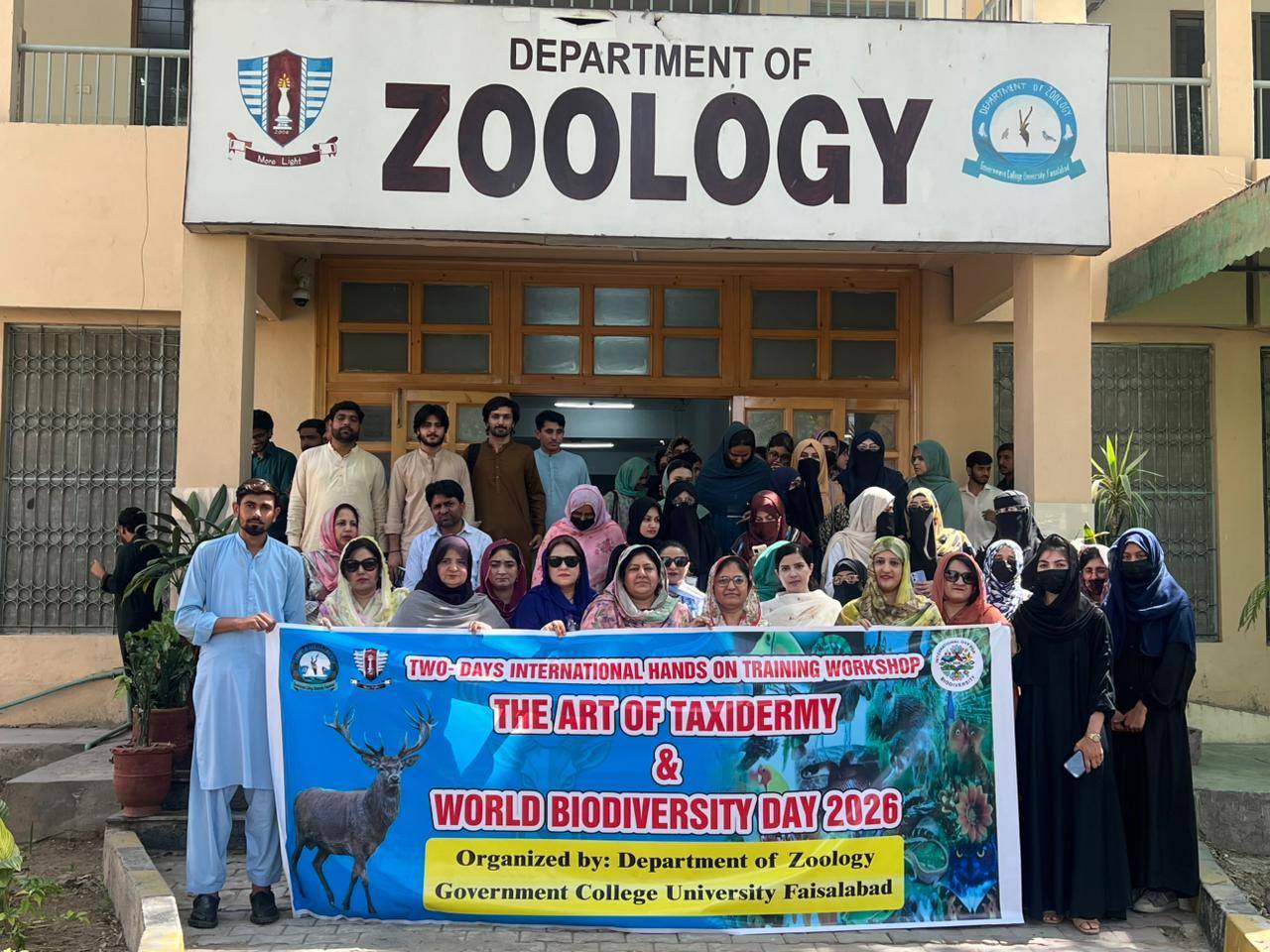
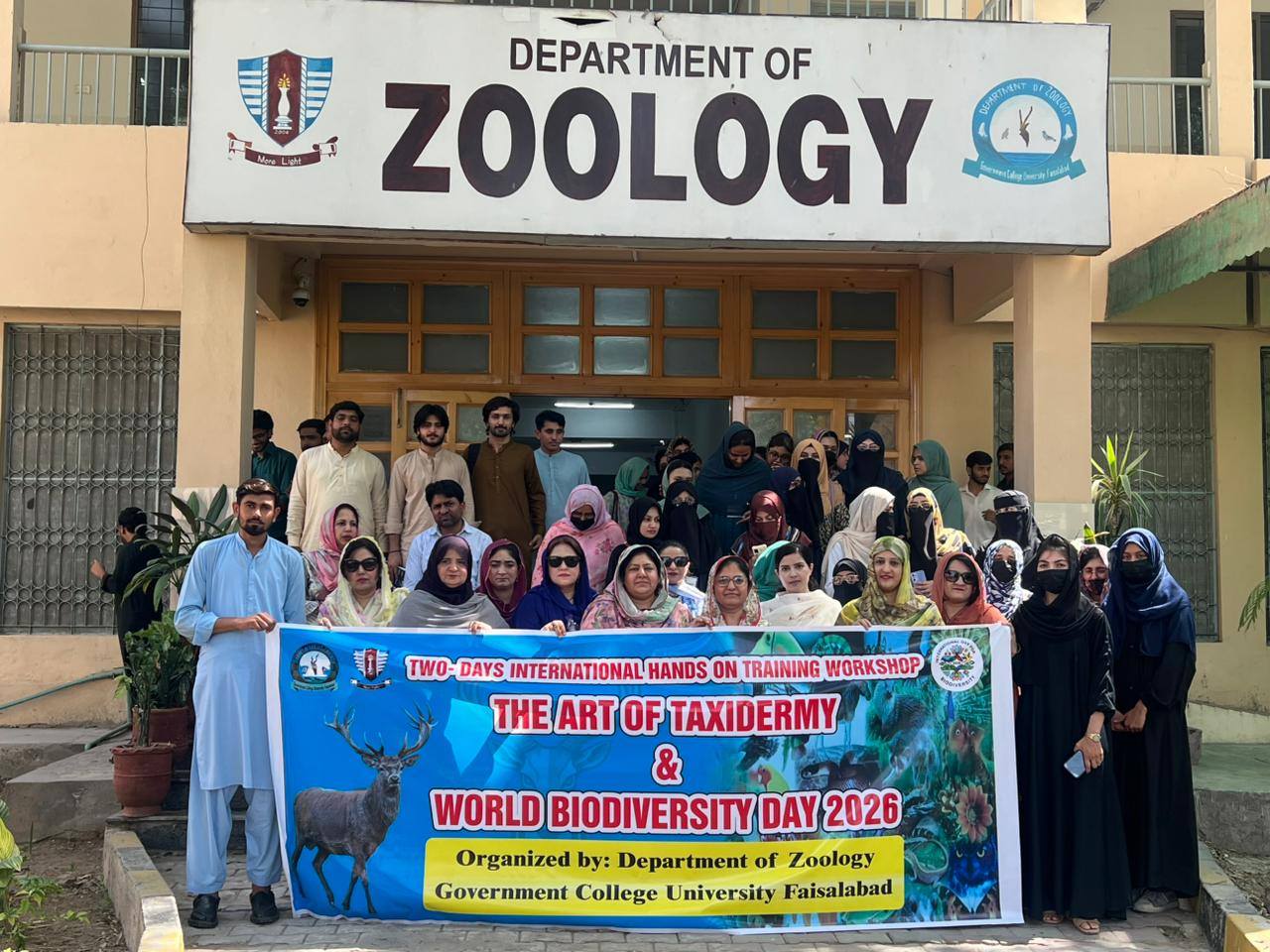
The Department of Zoology, Government College University Faisalabad, organized the 5th two-day international hands-on training workshop on “The Art of Taxidermy” in connection with World Biodiversity Day 2026 under the theme “Acting Locally for Global Impact.”
The workshop was held under the patronage of Prof. Dr. Farhat Jabeen, Dean of Life Sciences, with Dr. Shabana Naz serving as the principal organizer. The convener, Prof. Dr. Asma Ashraf, Chairperson of the Department of Zoology,
The workshop featured renowned researchers and academicians. The event began with a seminar in which guest speakers delivered insightful presentations. Prof. Vincenzo Tufarelli presented on taxidermy, biodiversity, and wildlife, highlighting their role in conservation and scientific research. At this occasion Dr. Misbah Sarwar discussed biodiversity, wildlife conservation, sanctuaries, and national parks, while Muhammad Adnan presented on the importance of biodiversity preservation. Dr. Ayesha Zulfiqar presented on crane bird species and their preservation strategies.
While addressing the participants, Prof. Dr. Farhat Jabeen highlighted the significance of biodiversity conservation and the role of academic institutions in promoting environmental awareness and sustainable practices. Prof. Dr. Asma Ashraf also addressed the participants and emphasized the importance of biodiversity conservation and zoological research.
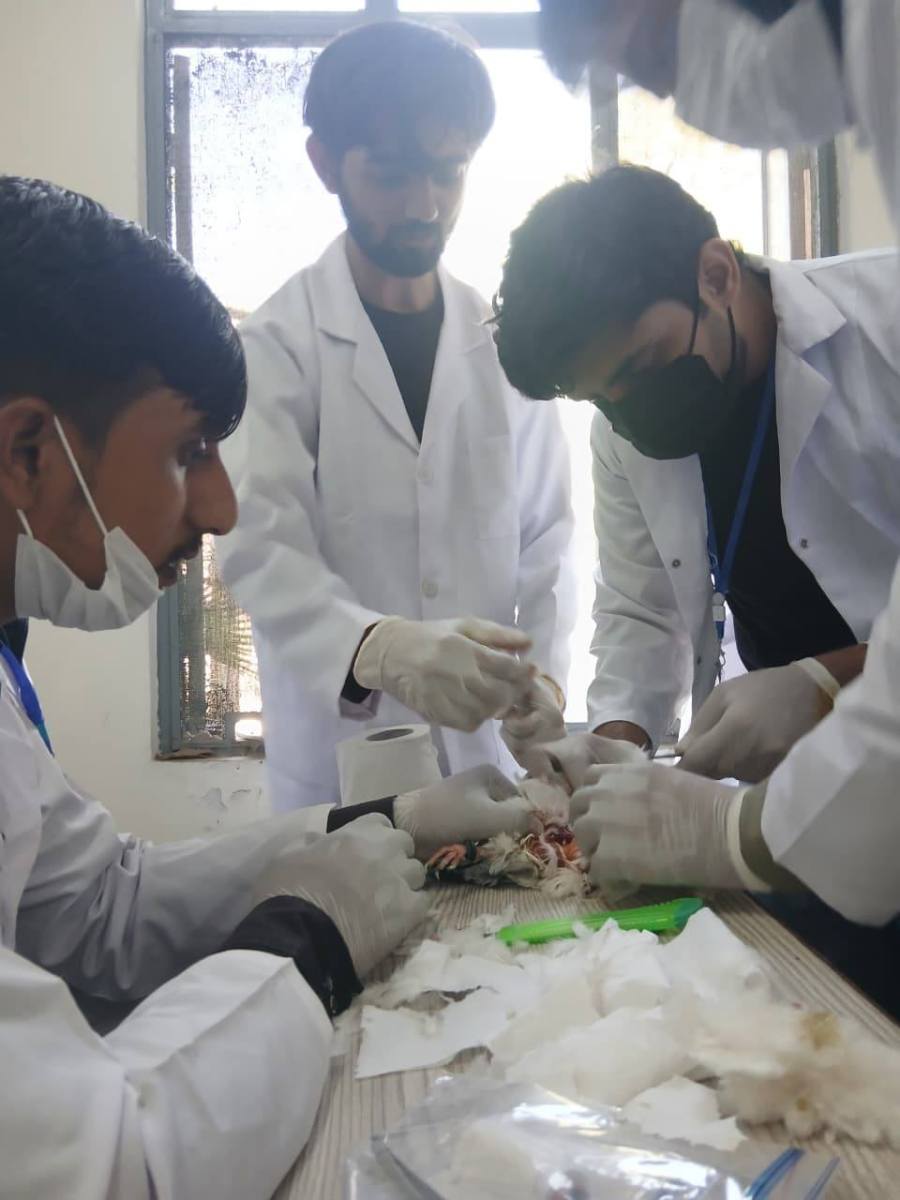
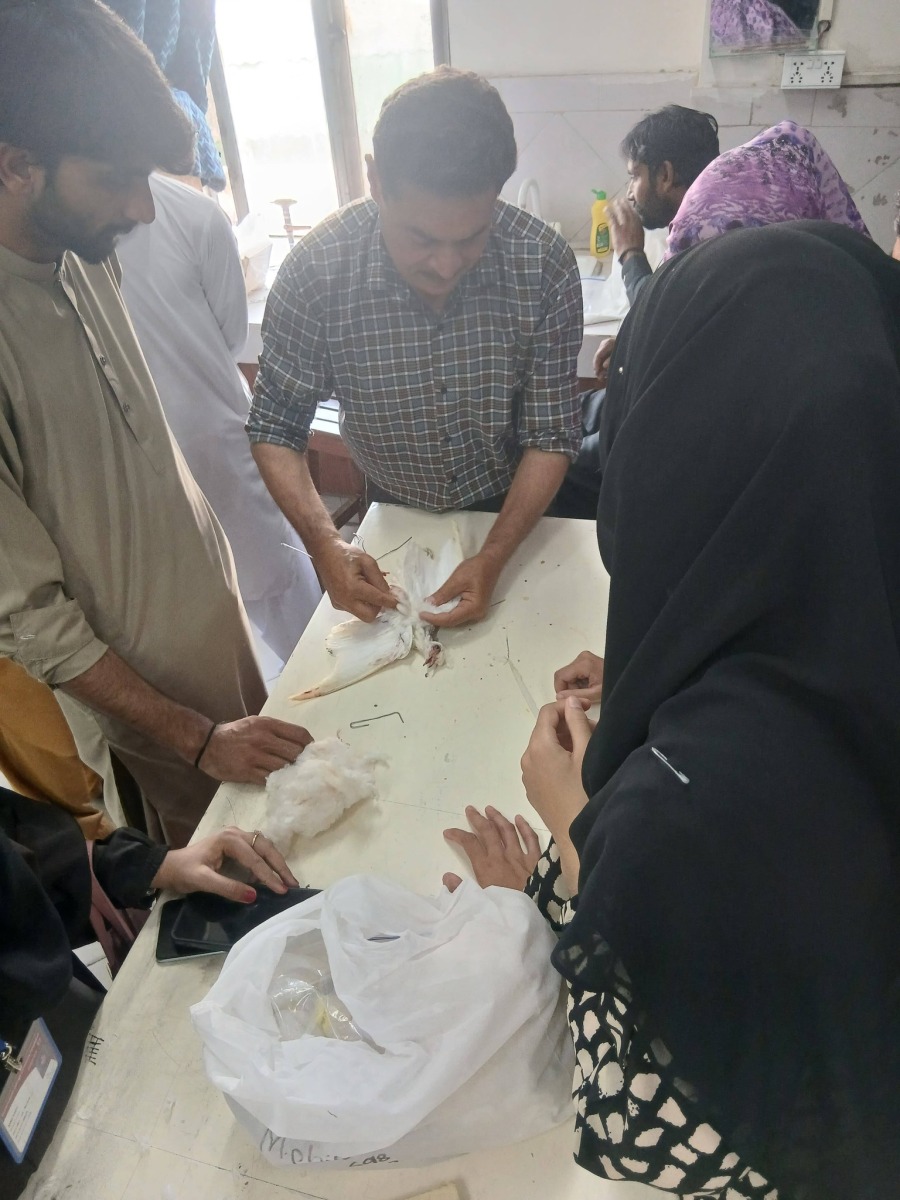
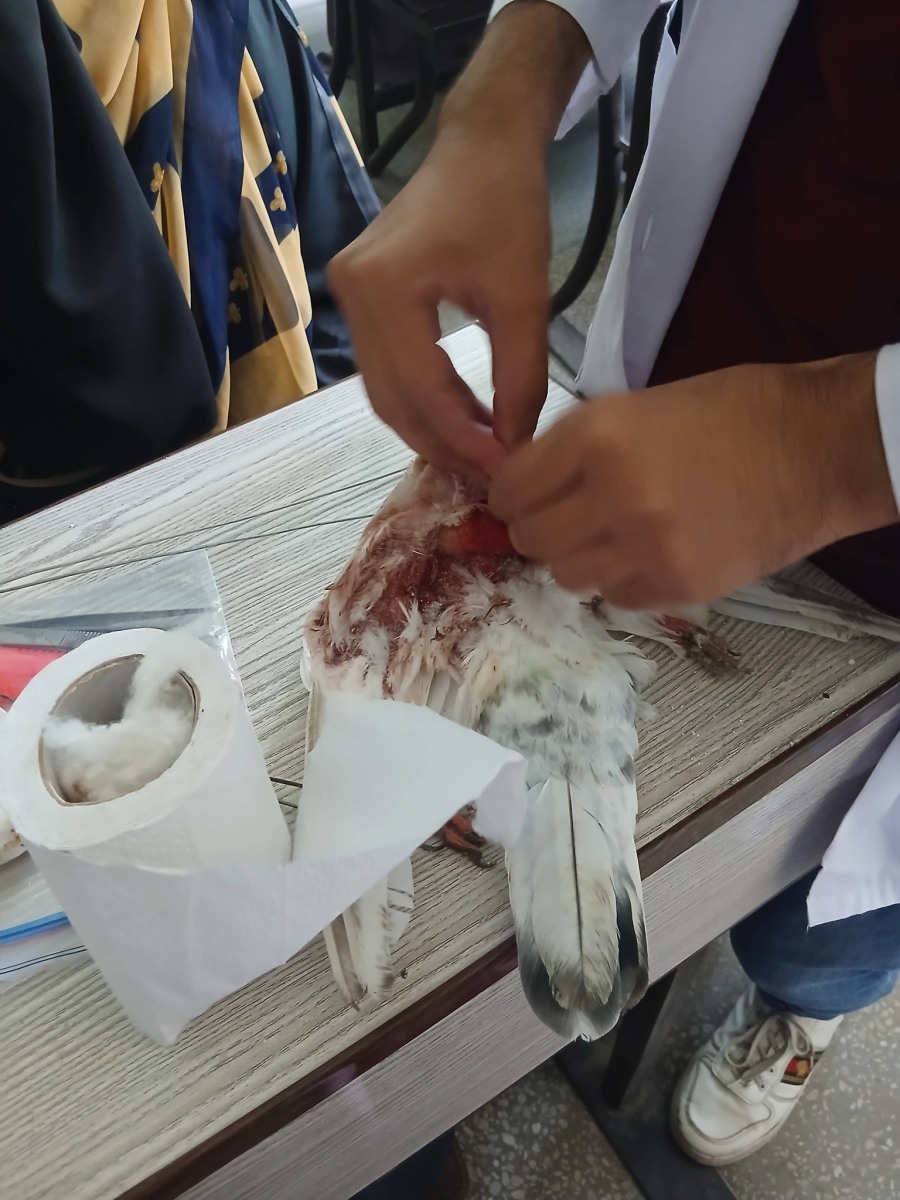
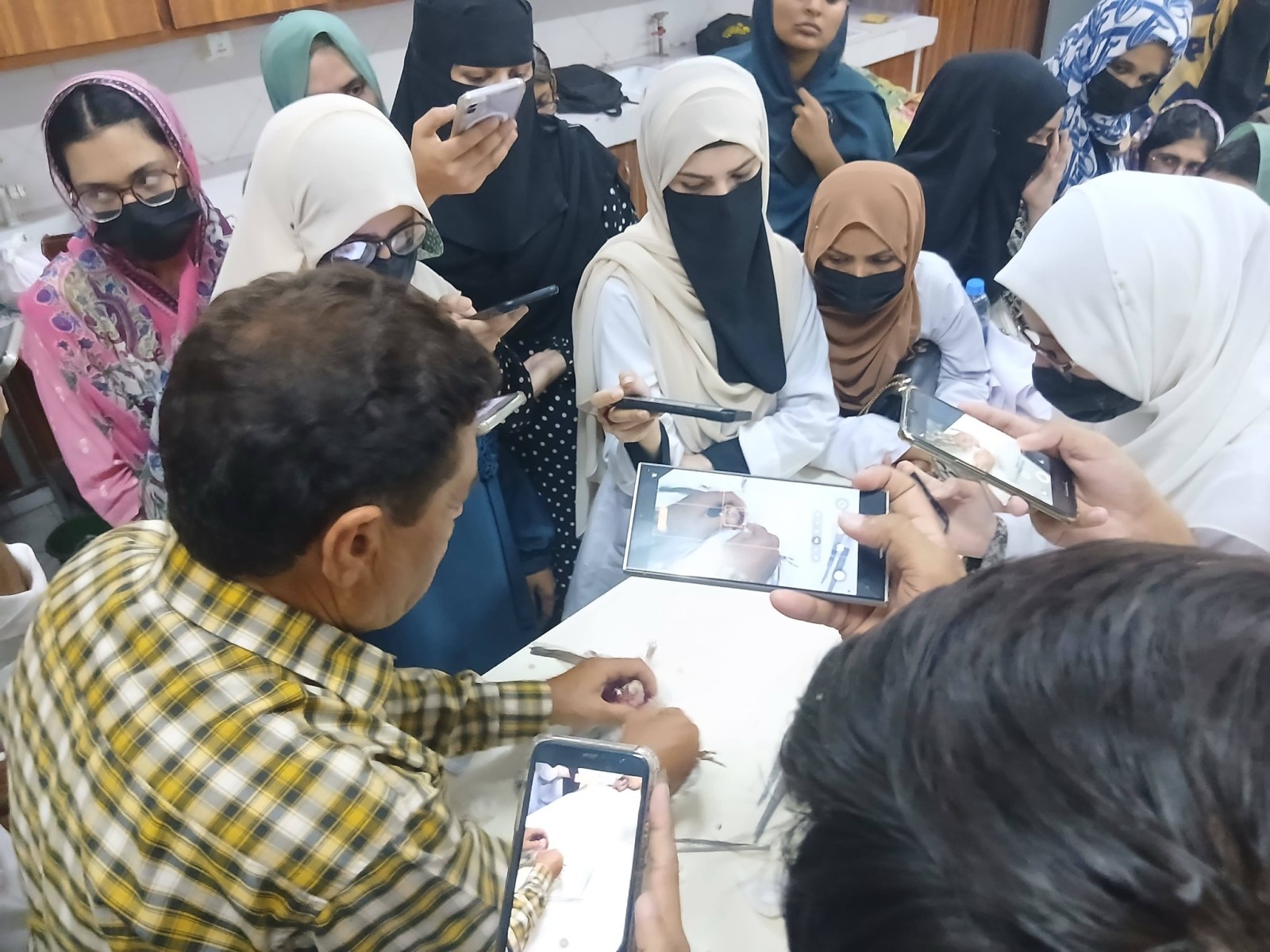
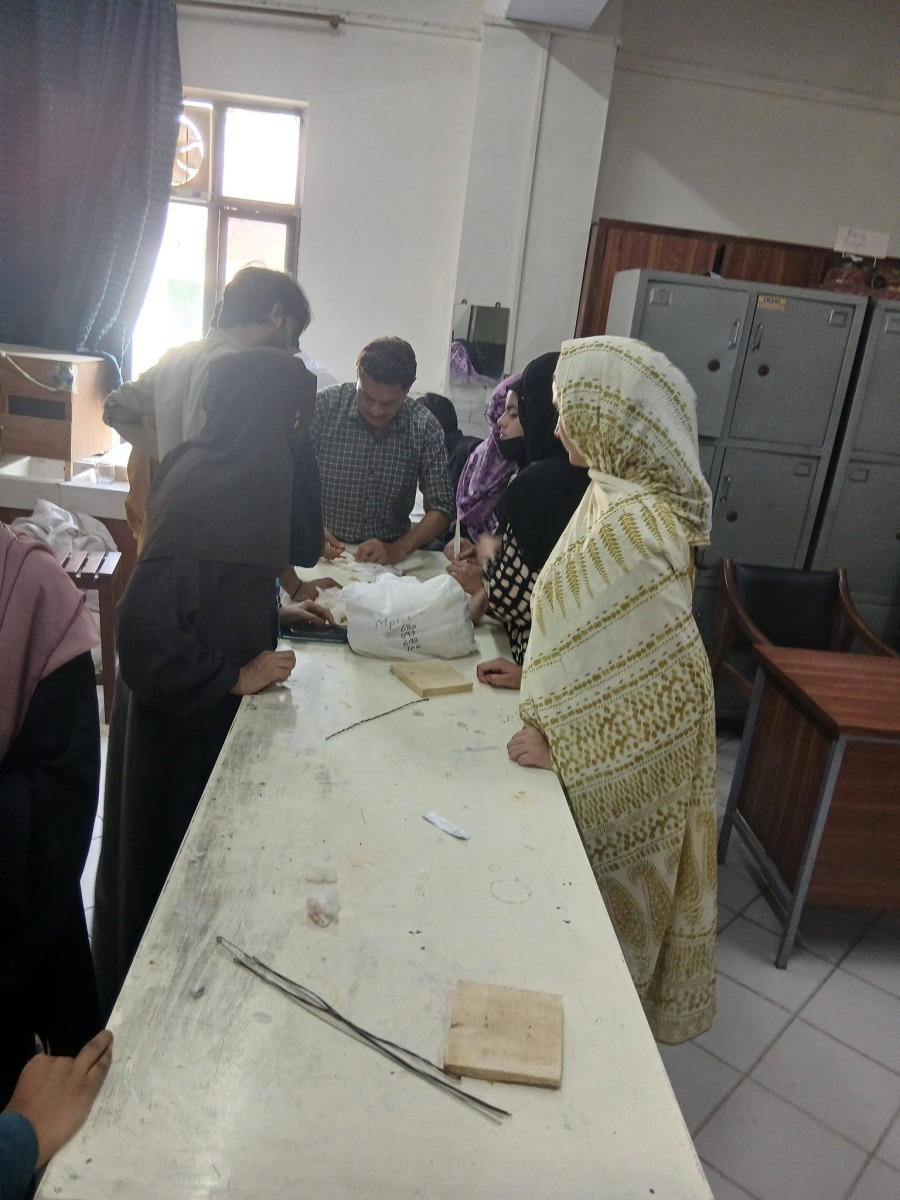
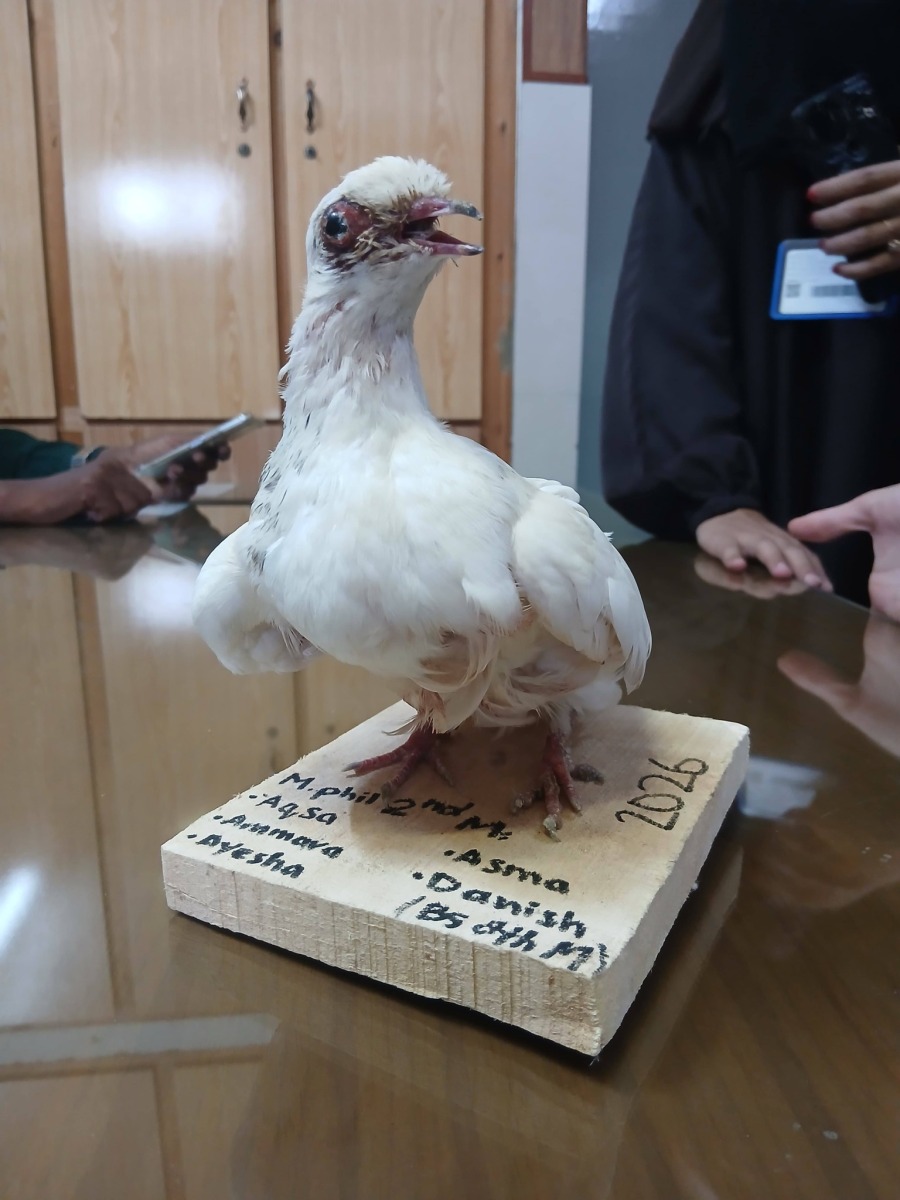
The practical training sessions were conducted by Mr. Shahid Iqbal from the World Wide Fund for Nature (WWF). The workshop focused on the long-term preservation of animal specimens through specialized taxidermy techniques. Under his guidance, students performed taxidermy procedures themselves and gained valuable hands-on experience. This opportunity successfully bridged theory with practice, as participants were guided through the ethical and scientific principles of specimen preparation, preservation, stuffing, and lifelike mounting techniques for educational, research, and scientific purposes.
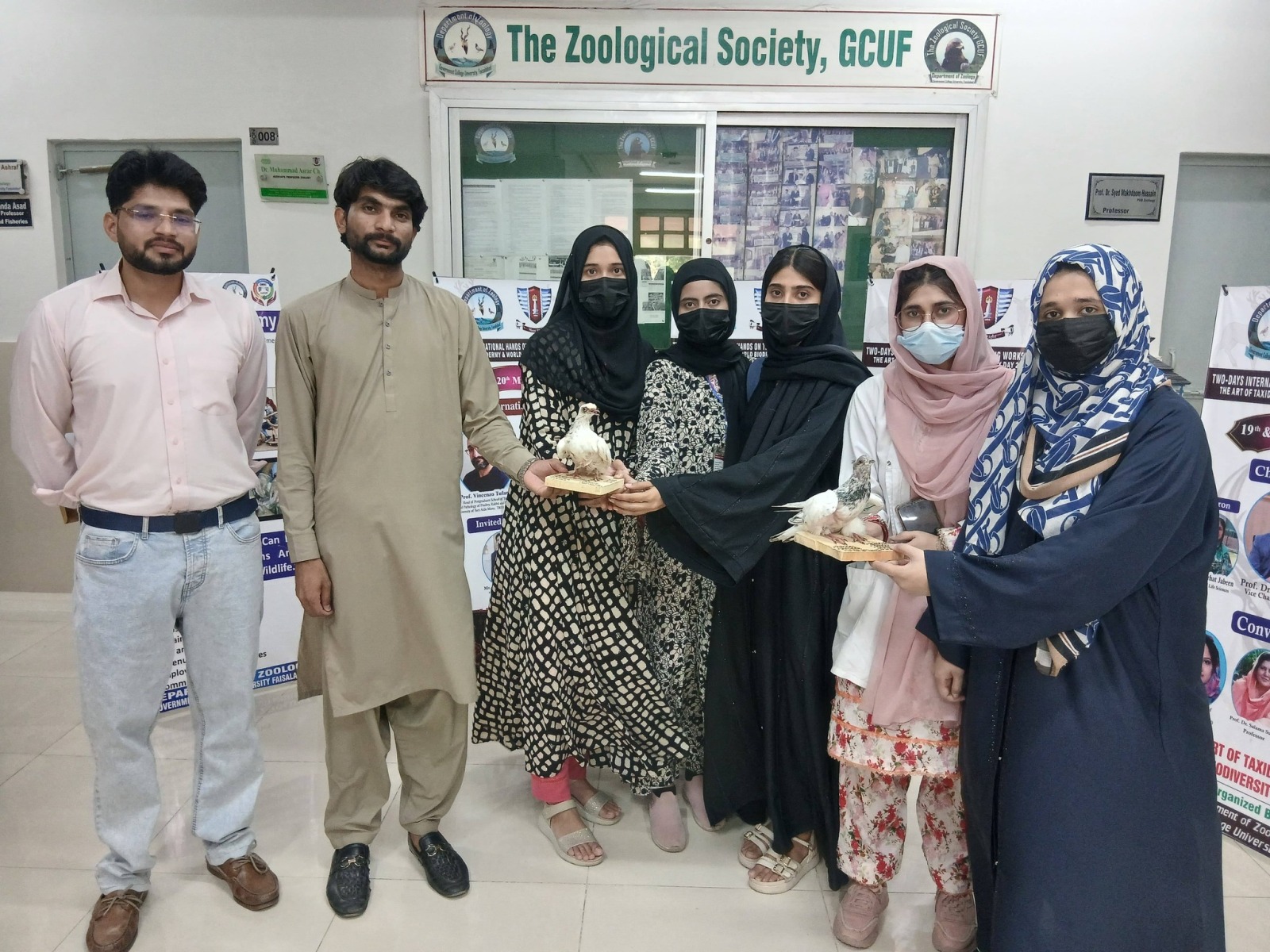
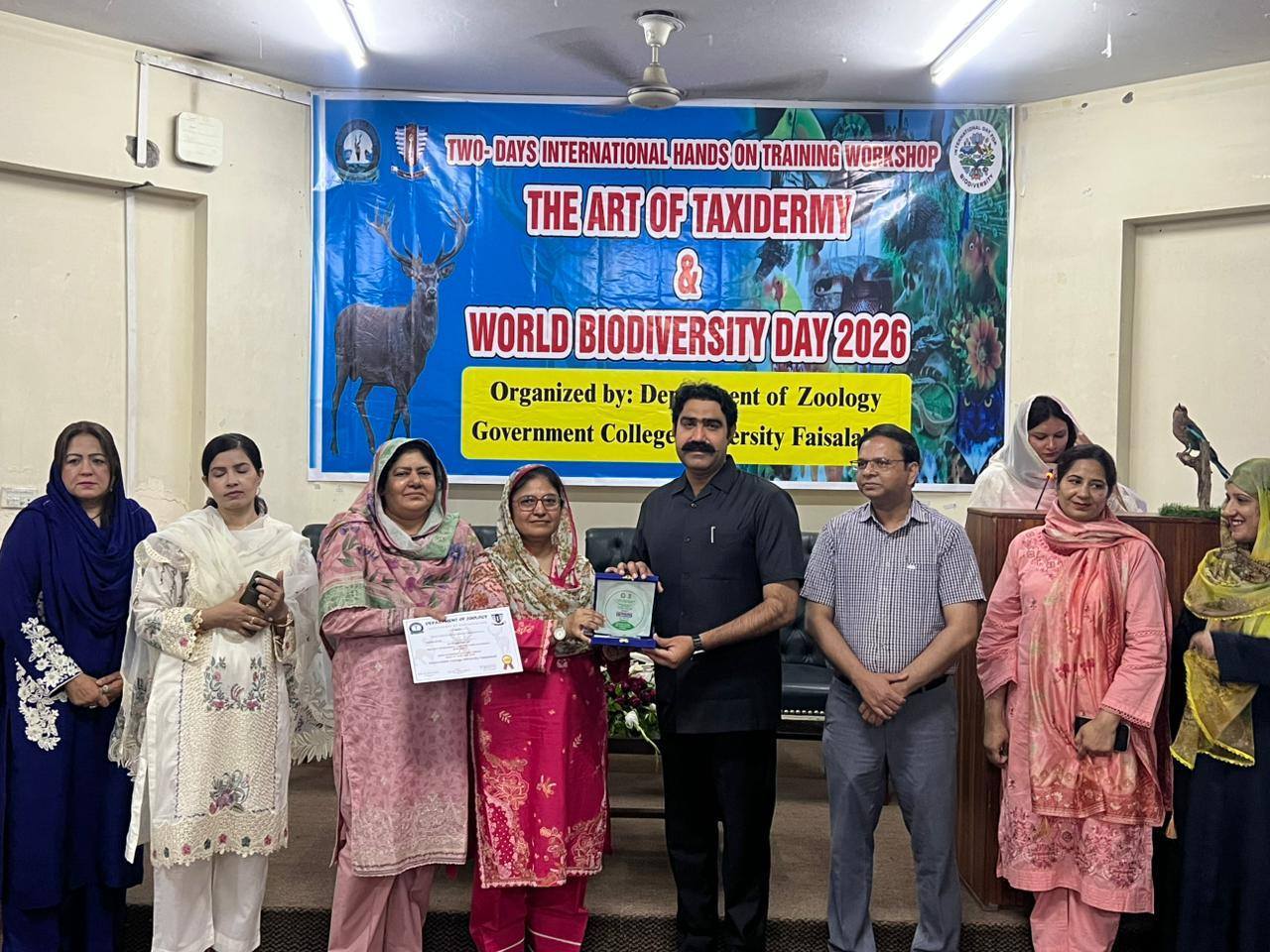
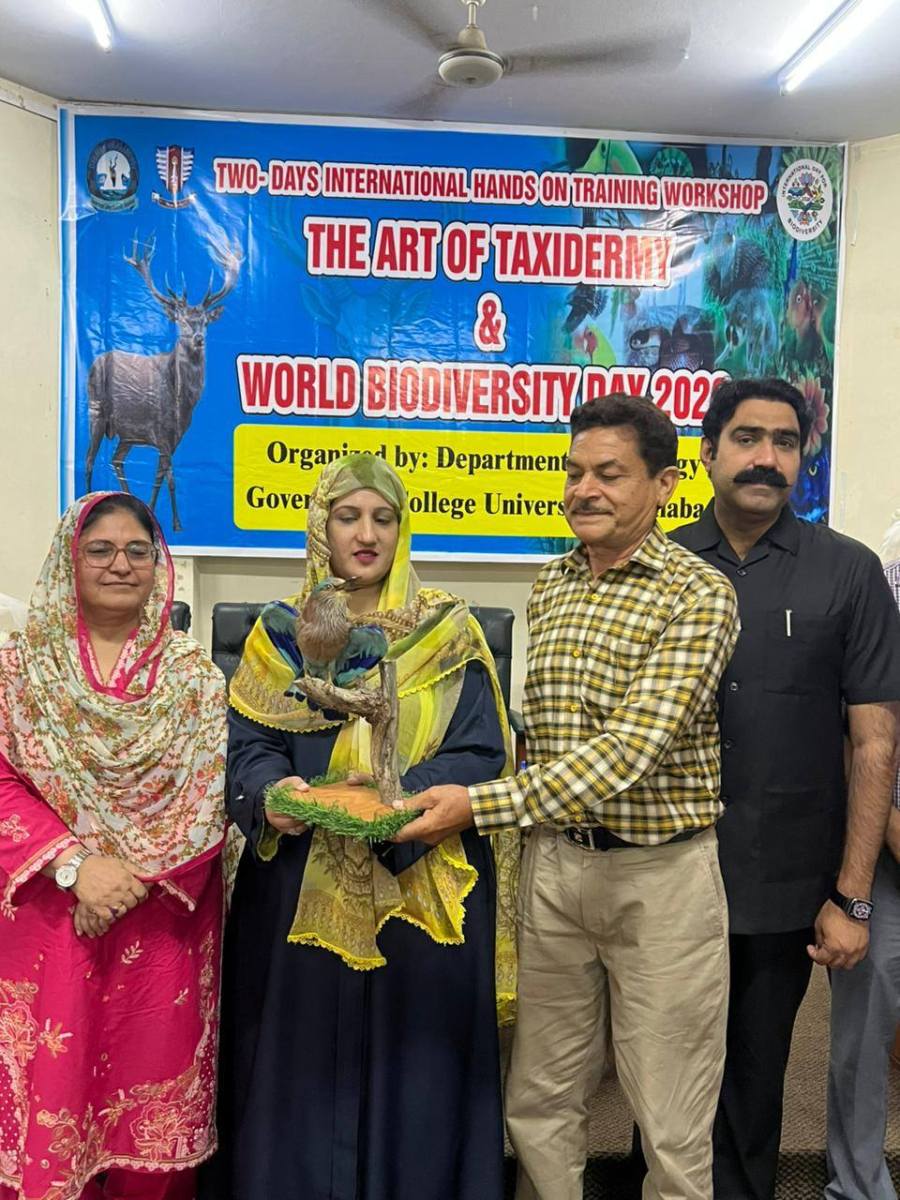
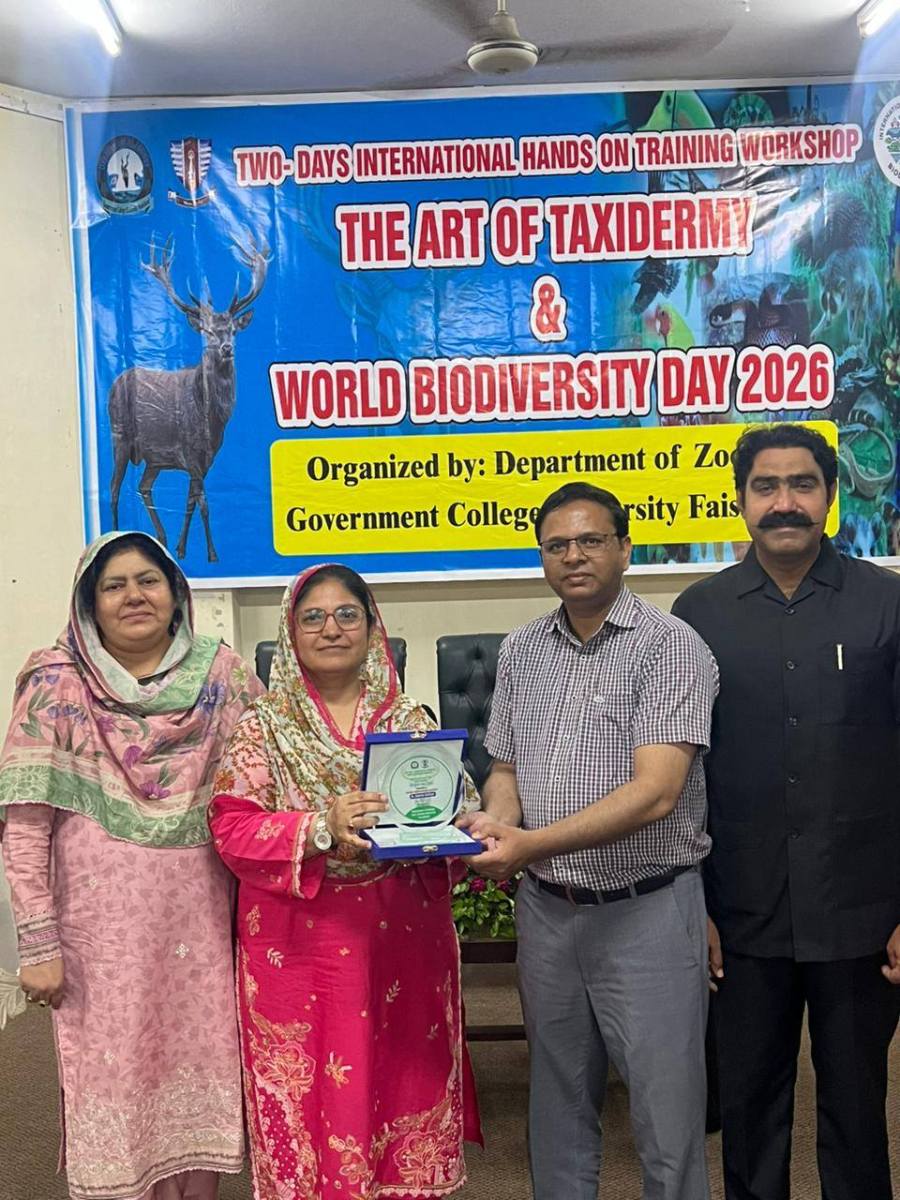
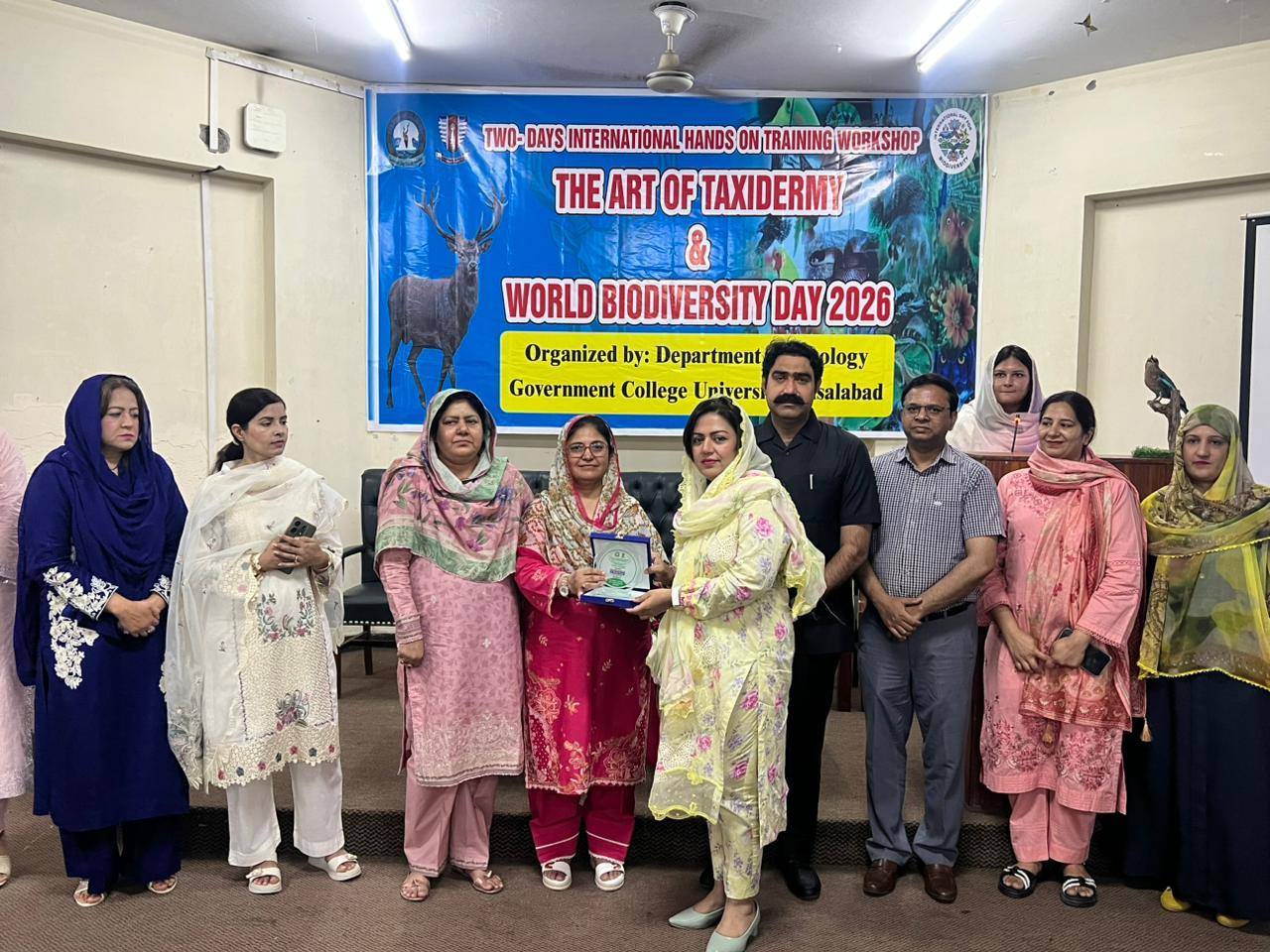
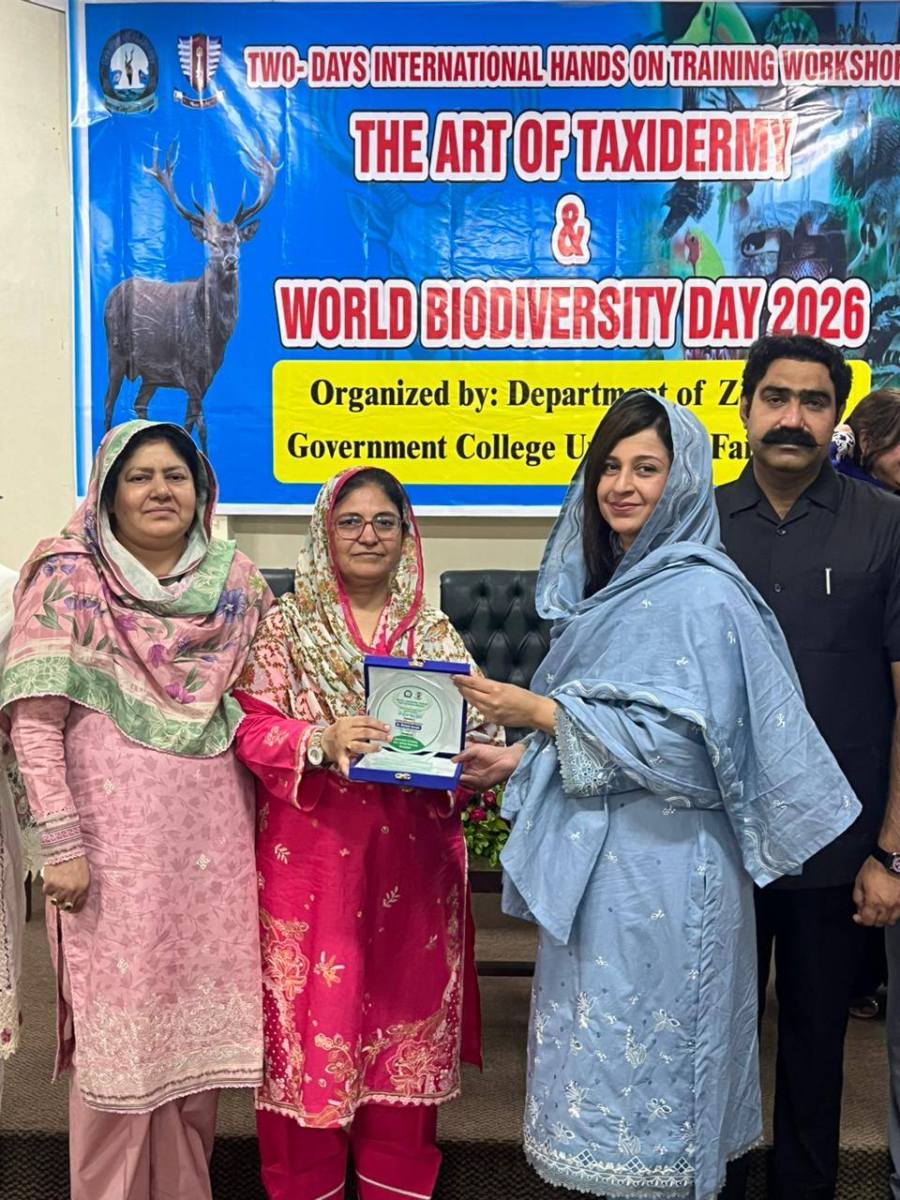
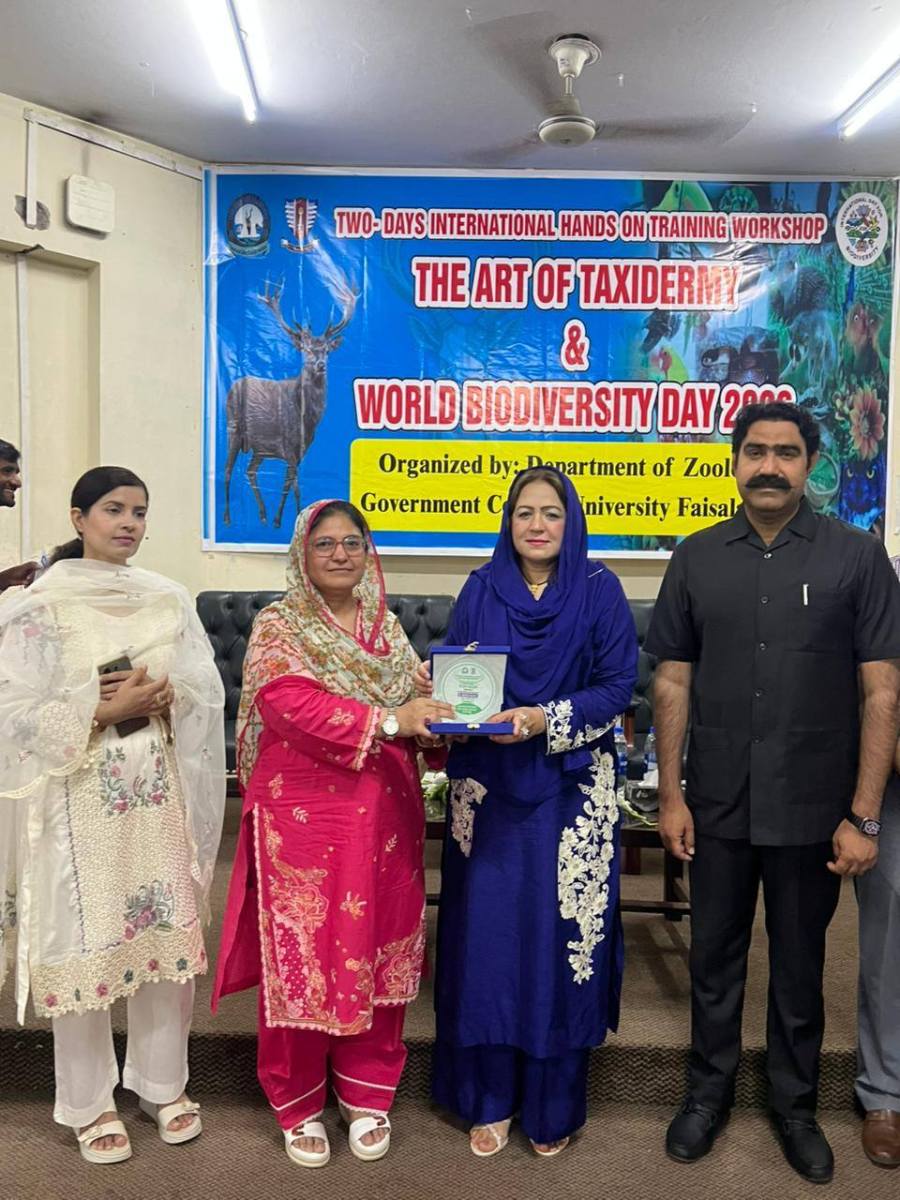
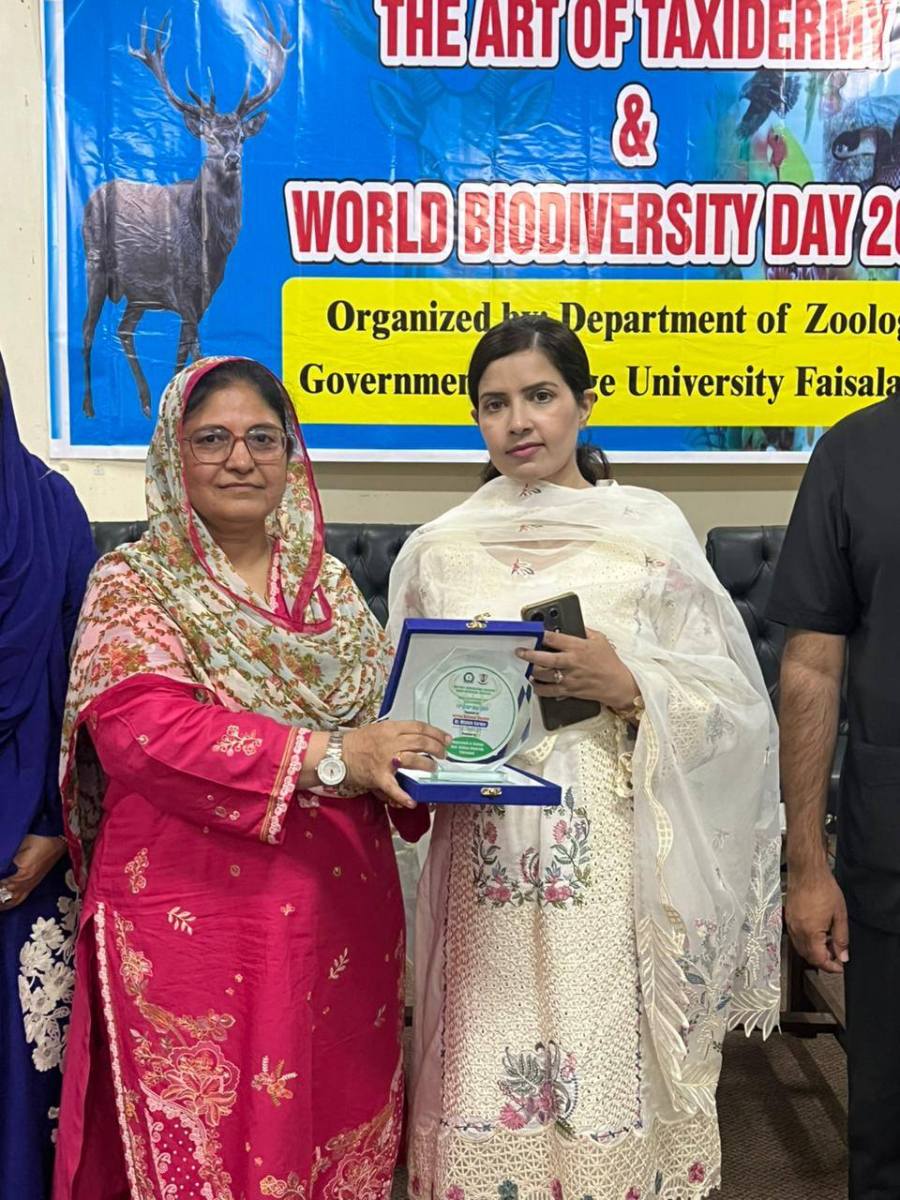
At the conclusion of the workshop, souvenirs and certificates were distributed among the organizers and participants. The event concluded successfully, leaving participants enriched with valuable knowledge, practical skills, and a deeper understanding of taxidermy and biodiversity conservation.