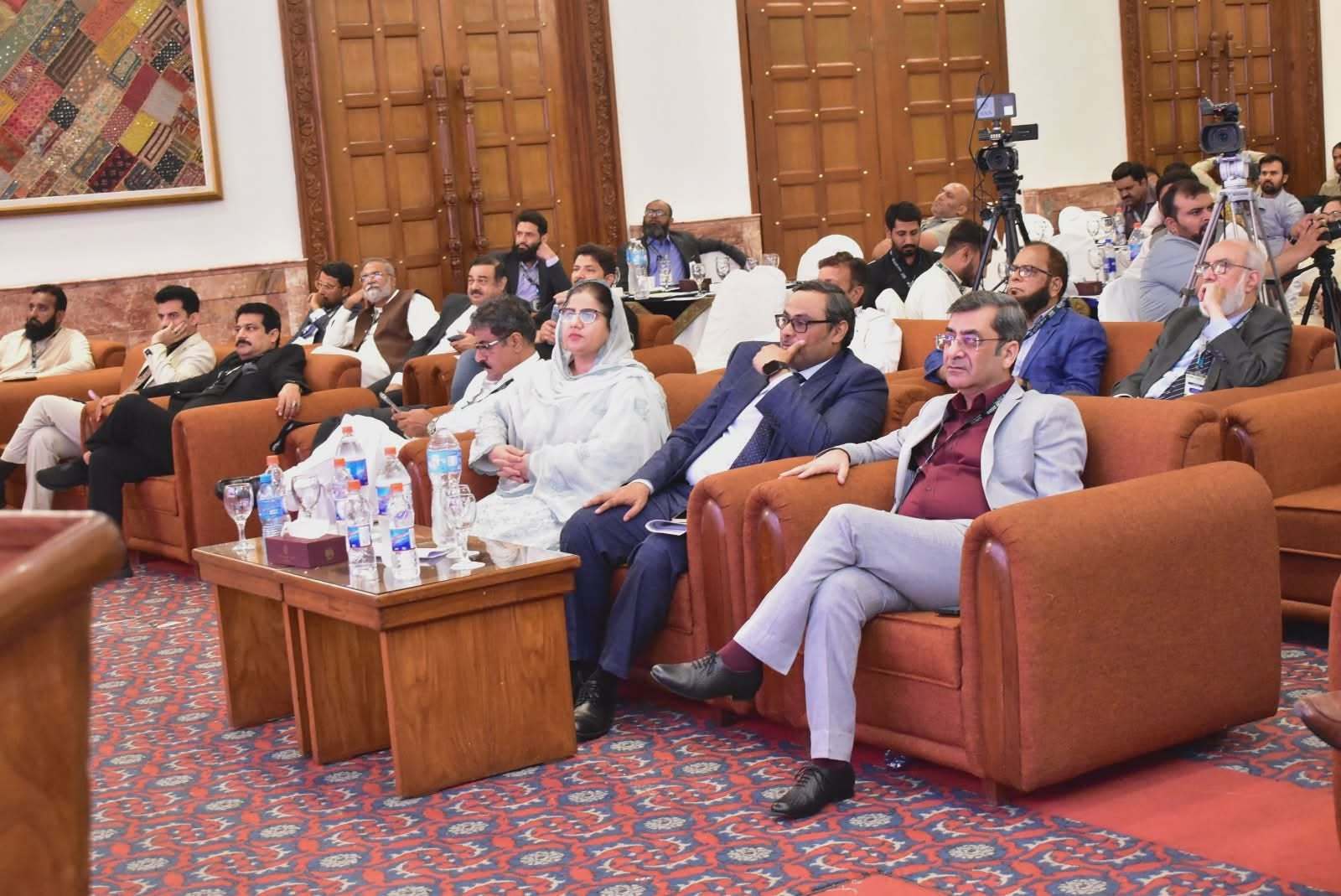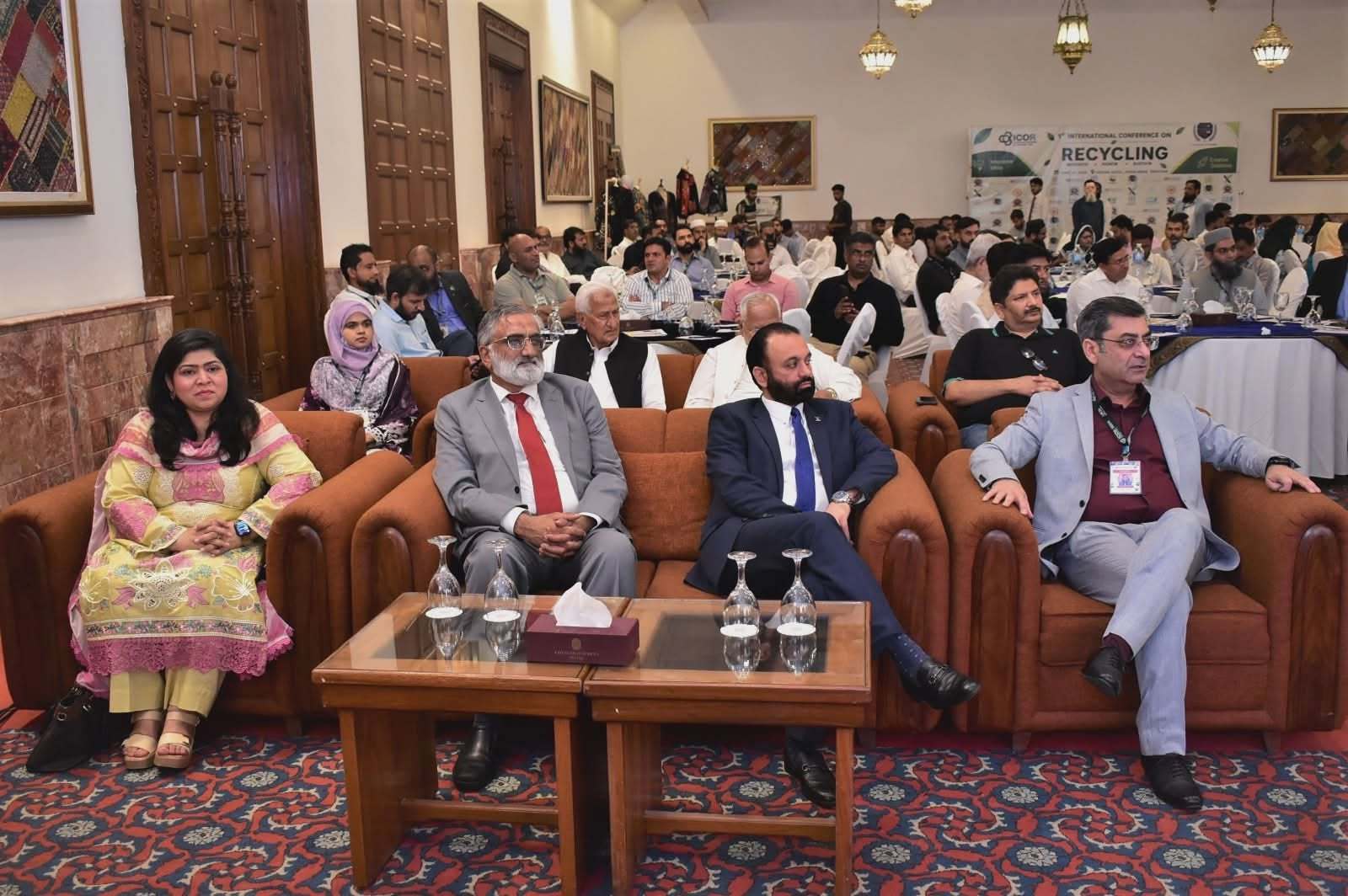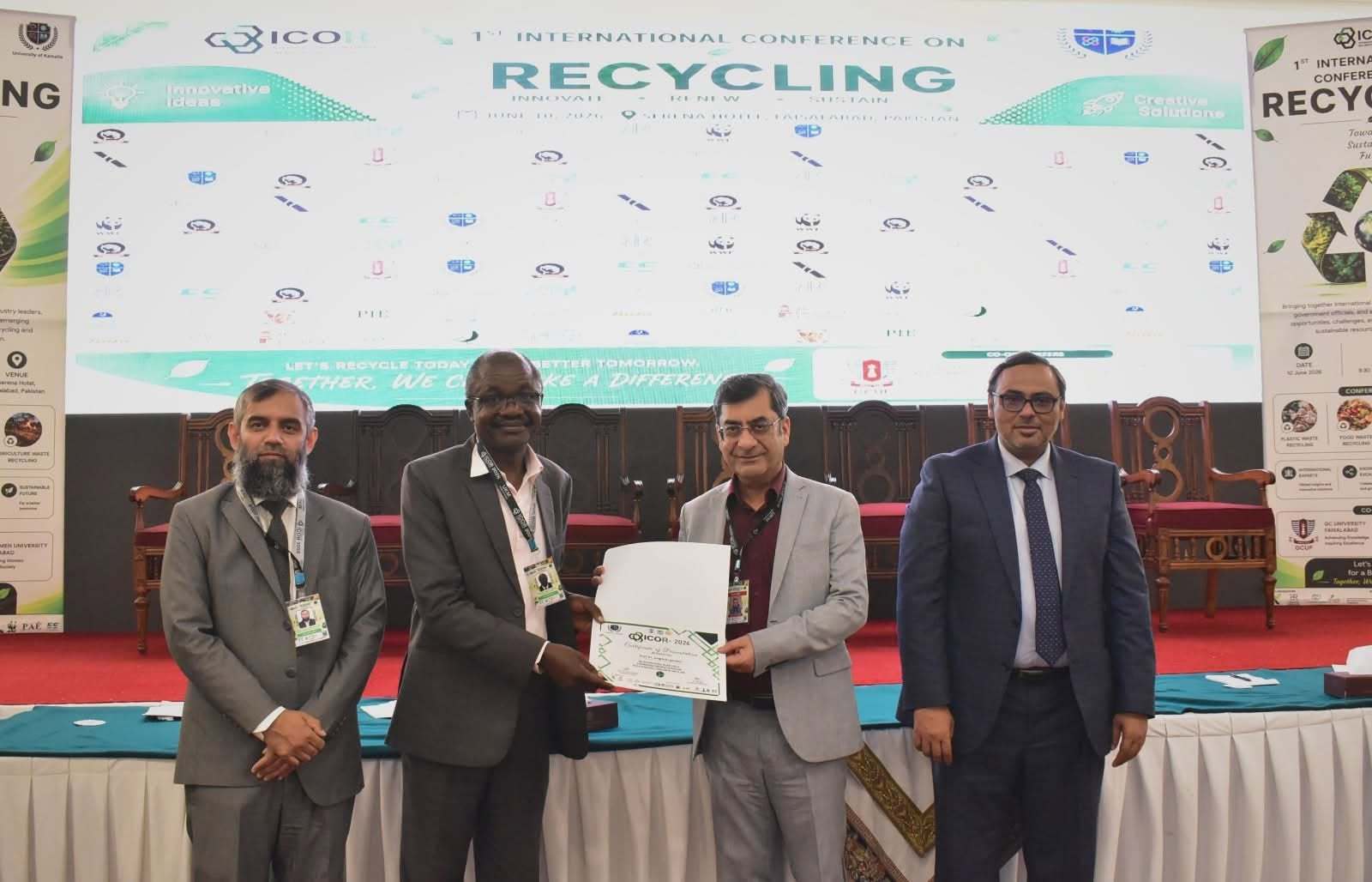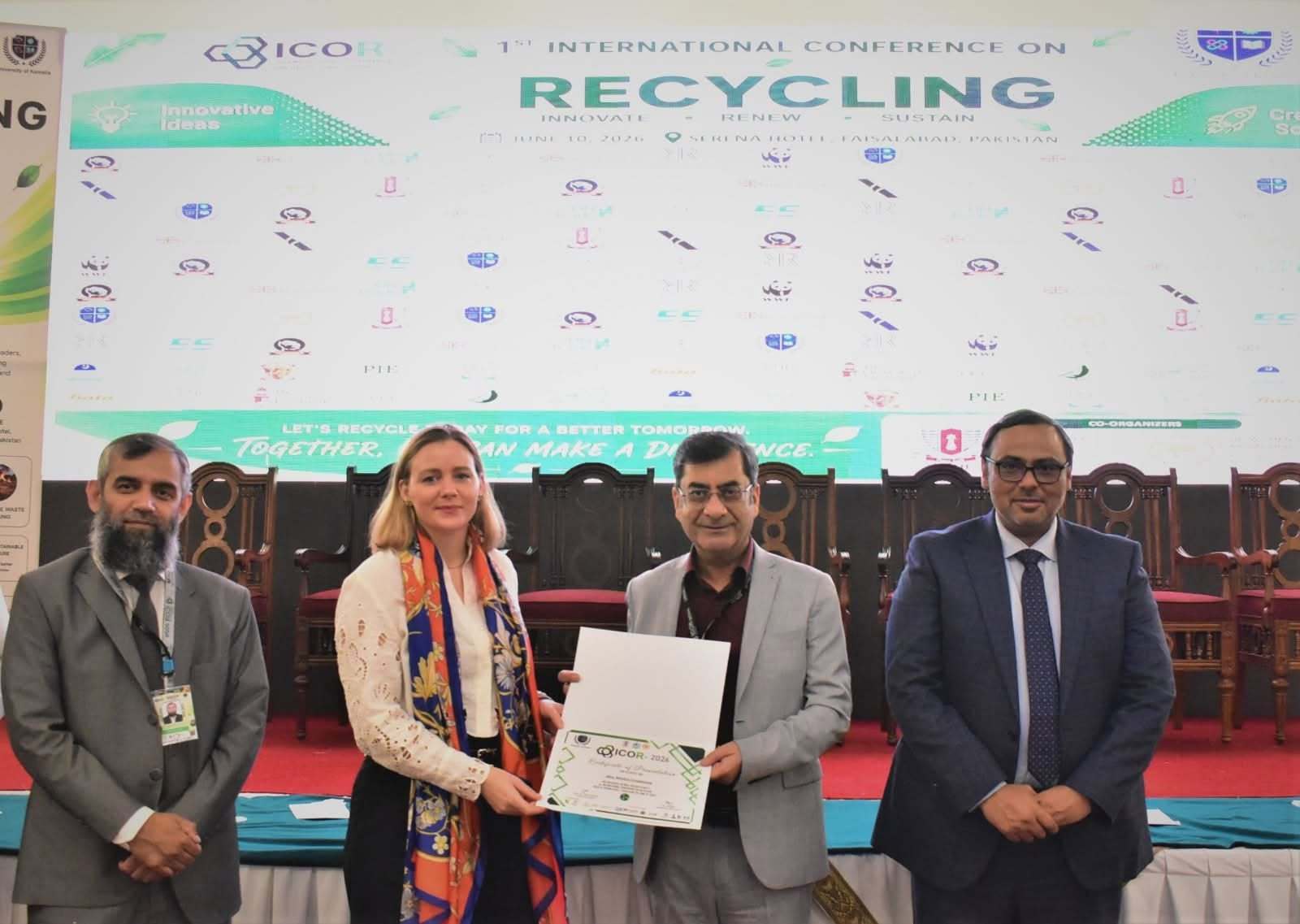
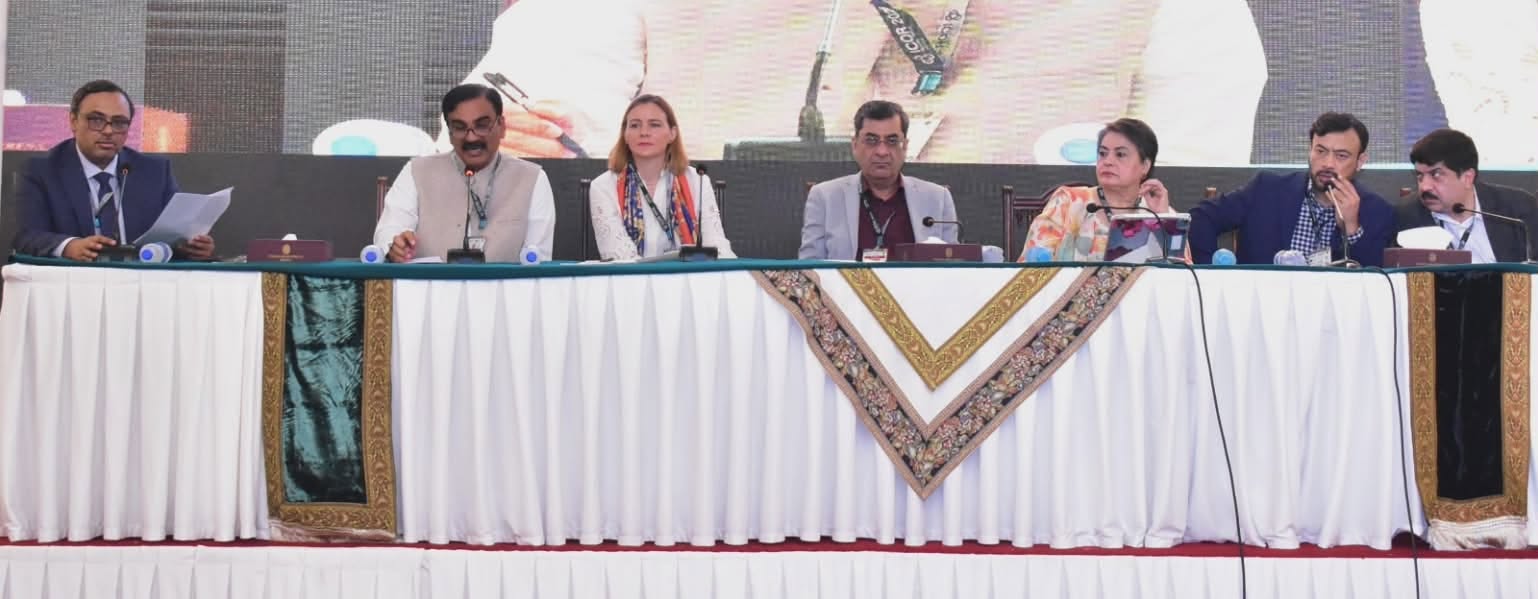
The First International Conference on Recycling (ICOR 2026) concluded successfully at Serena Hotel Faisalabad after bringing together leading academics, industry experts, policymakers, entrepreneurs, and development partners from Pakistan and abroad to discuss innovative solutions for recycling, resource efficiency, and sustainable development.
The conference was jointly organized by the University of Kamalia, Government College University Faisalabad (GCUF), and Government College Women University Faisalabad (GCWUF) under the theme “Towards a Circular Future.” More than 50 organizations and representatives from six countries participated in the event, making it one of the largest forums in Pakistan dedicated to recycling and the circular economy.
The conference commenced with a welcome address by Conference Secretary Dr. Ali Ijaz, followed by an invited talk by Dr. Muzzamal Hussain of the National Textile University, who highlighted the current state of recycling in Pakistan and the opportunities for transitioning towards sustainable industrial practices.
A key feature of the conference was a high-level panel discussion titled “Transitioning to a Circular Economy: Building Circular Regions — Circular Faisalabad.” The session was moderated by Vice Chancellor University of Kamalia Prof Dr Yasir Nawab and featured distinguished speakers from academia, industry, government agencies, and international organizations. Among the panelists were Vice Chancellor GCUF Prof Dr Rauf-i-Azam, Vice Chancellor GCWUF Prof Dr Kanwal Ameen, representatives of the Faisalabad Chamber of Commerce and Industry, Faisalabad Waste Management Company, Pakistan Poultry Association, and international circular economy experts. The panel explored strategies for promoting resource efficiency, industrial symbiosis, sustainable production, and waste reduction in Pakistan’s industrial hub.
Speaking during the conference, Prof Dr Rauf-i-Azam emphasized that universities must play a leading role in addressing environmental challenges through research, innovation, and industry engagement. He stated that collaboration among educational institutions, policymakers, and industrial stakeholders was essential for achieving sustainable development and strengthening Pakistan’s circular economy ecosystem.
The conference featured a series of technical sessions covering textile circularity, plastic recycling, bioenergy, agro-food waste Valorization, wastewater reuse, circular bio economy, smart waste management systems, and sustainable industrial transformation.
Researchers and experts presented innovative technologies, case studies, and policy recommendations aimed at reducing waste and maximizing resource utilization.